
Adhesives in Flex PCB Manufacturing
As PCB designs continue to evolve and shrink, engineers face the challenge of accommodating more functionality into smaller spaces. This is often achieved by increasing the layer count of the PCB to improve its circuitry density. However, the resulting layer stack is not without its limitations. Increasing the number of layers often leads to a significant increase in board thickness, which may not be acceptable in some applications. Additionally, the influx of additional layers can make the PCB more prone to mechanical fatigue and stress due to uneven distribution of forces across different sections. In these cases, the addition of stiffeners can help mitigate these concerns and ensure that the flex or rigid-flex portion of the circuit is capable of withstanding the demands of specific applications.
A critical factor in designing flexible circuits is selecting the proper substrate material. A variety of materials are available, including FR-4, FR-5, and polyimide. The choice of which one to use depends on factors such as cost, temperature rating, and flexibility. For example, FR-4 can be made to be more flexible than other types of laminates, but it is not suitable for high-temperature applications. FR-5, on the other hand, has better thermal properties and can be made more flexible by using thinner layers of copper.
In addition to the selected substrate material, the layer stack of a flex or rigid-flex pcb manufacturing must be considered during the design process. In most cases, this will involve the use of conductive copper in various shapes and forms to create the desired circuitry. Copper is an excellent conductor and offers numerous benefits for a flex or rigid-flex PCB, such as low resistance, high workability, and superior electrical characteristics. Additionally, copper can be found in various widths to accommodate varying requirements for bending and flexing.
The Role of Adhesives in Flex PCB Manufacturing
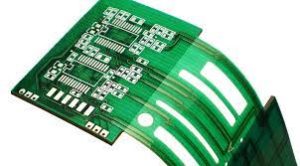
Another consideration is the type of adhesive to be used in the flex or rigid-flex PCB. Adhesives are used in a number of ways, from bonding the copper and laminate to coverlay and silkscreen attachment. In general, these adhesives are either hot-melt or epoxy. In some cases, a combination of both types are used. In addition to adhesives, a flex or rigid-flex PCB may also require the addition of stiffeners to provide mechanical reinforcement for a flex section or a flex-to-rigid interface. These stiffeners can be made from a variety of materials, such as silicones, thermosetting epoxies, or protective beads.
Routing traces: This can be challenging when working with a flex circuit. It is necessary to route traces perpendicular to the overall bend line, rather than parallel to it. This helps to avoid stress points that can damage the traces and cause failures in the circuit board. It is also a good idea to stagger the layers of the flex circuit to minimize stiffness in bend locations.
The deciding factor in choosing the right stiffener material should be its ability to preserve the inherent flexibility of the flex circuit while providing adequate structural support and mechanical integrity. In addition, the selected stiffener should be resistant to environmental conditions such as humidity and temperature variations. This is essential in ensuring that the flex or rigid-flex portion can sustain a variety of operational scenarios without degradation or failure.