
components arranged on an electronic assembly near me
The arrangement of components on an electronic assembly near you plays a pivotal role in determining the functionality, efficiency, and reliability of electronic devices. From consumer gadgets to industrial machinery, the layout of components on a printed circuit board (PCB) or other substrates is carefully designed to optimize performance and ensure seamless operation. Understanding how these components are arranged provides valuable insights into the intricacies of electronics manufacturing and the principles governing modern technology.
At the heart of every electronic assembly near me is the PCB, a flat board that serves as the foundation for mounting electronic components and providing electrical connections between them. The layout of components on the PCB is meticulously planned during the design phase, taking into account factors such as signal integrity, thermal management, and manufacturability. Components are strategically placed to minimize signal interference, optimize electrical pathways, and facilitate efficient heat dissipation.
One of the key considerations in component arrangement is signal integrity, which refers to the ability of electronic signals to propagate without distortion or loss of information. Components that interact closely with each other or handle high-frequency signals, such as microprocessors and memory chips, are typically placed in proximity to minimize signal degradation and ensure reliable communication. Additionally, signal traces on the PCB are routed carefully to avoid cross-talk and electromagnetic interference, further preserving signal integrity.
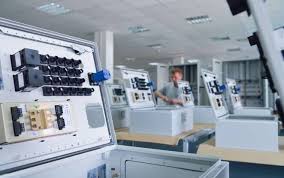
How are components arranged on an electronic assembly near me?
Thermal management is another critical aspect of component arrangement, especially in electronic assemblies that generate significant heat during operation. Components such as processors, power regulators, and high-power amplifiers are often grouped together and positioned strategically to facilitate efficient heat dissipation. Heat sinks, thermal vias, and other cooling mechanisms may be incorporated into the design to prevent overheating and ensure long-term reliability.
In addition to optimizing signal integrity and thermal management, component arrangement also influences the manufacturability of electronic assemblies. Components are placed on the PCB in a manner that facilitates automated assembly processes such as pick-and-place, soldering, and inspection. Design for manufacturability (DFM) principles are employed to minimize assembly errors, reduce production costs, and enhance overall yield.
The arrangement of components on an electronic assembly near you is guided by various design considerations and constraints, including space constraints, functional requirements, and regulatory compliance. Miniaturization trends in the electronics industry have led to the development of densely packed assemblies with components mounted in close proximity to each other. Advanced packaging technologies such as chip-on-board (COB), surface-mount technology (SMT), and ball grid array (BGA) enable higher component densities and more compact designs.
Moreover, advancements in three-dimensional (3D) integration techniques have enabled the stacking of components vertically, further increasing the packing density and functionality of electronic assemblies. Through-silicon vias (TSVs), interposers, and other interconnect technologies facilitate the integration of multiple chips and subsystems into a single compact package, offering enhanced performance and scalability.
In conclusion, the arrangement of components on an electronic assembly near you is a complex and carefully orchestrated process that involves balancing various design considerations and constraints. From optimizing signal integrity and thermal management to ensuring manufacturability and regulatory compliance, every aspect of component arrangement contributes to the functionality, reliability, and efficiency of electronic devices. As technology continues to evolve, so too will the methods and techniques used to arrange components, driving innovation and shaping the future of electronics manufacturing.