
hdi printed circuit board
Radio Frequency (RF) applications encompass a broad spectrum of technologies ranging from wireless communication systems to radar and satellite systems. The demand for high-performance RF devices continues to grow, driven by the proliferation of wireless connectivity and the Internet of Things (IoT). Amidst this landscape, the question arises: Can High-Density Interconnect (HDI) printed circuit boards (PCBs) meet the stringent requirements of RF applications?
HDI PCBs have gained prominence in the electronics industry for their ability to pack more functionality into smaller form factors. With their high wiring density and advanced interconnection technologies, HDI PCBs offer numerous advantages such as reduced size, weight, and improved signal integrity. These attributes make them appealing for a wide range of applications, including those in the RF domain.
One of the primary concerns when considering the use of HDI PCBs in RF applications is signal integrity. RF systems operate at high frequencies, where signal losses, impedance mismatches, and electromagnetic interference can significantly impact performance. However, advancements in hdi printed circuit board manufacturing techniques, such as microvias and controlled impedance routing, have enabled designers to achieve the stringent electrical requirements demanded by RF circuits.
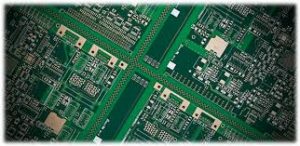
Can hdi printed circuit board be used in RF applications?
The miniaturization enabled by HDI technology also plays a crucial role in RF applications. Compact RF modules and devices benefit from the reduced size and improved signal propagation characteristics afforded by HDI PCBs. Miniaturization not only enhances the portability of RF equipment but also allows for more efficient use of space in densely packed systems, such as phased-array antennas and RF front-end modules.
Furthermore, the use of HDI PCBs can facilitate the integration of multiple RF functions onto a single board, leading to simplified assembly processes and reduced system complexity. This integration can encompass components such as RF filters, amplifiers, oscillators, and antennas, enabling the development of highly integrated RF solutions with improved performance and reliability.
Another advantage of HDI PCBs in RF applications is their enhanced thermal management capabilities. RF circuits often generate heat, which can degrade performance and reliability if not effectively dissipated. The improved thermal conductivity of HDI PCB materials, coupled with efficient heat dissipation techniques such as via-in-pad and metal-core substrates, helps maintain optimal operating temperatures for RF components.
Despite these advantages, several factors need to be considered when employing HDI PCBs in RF applications. High-frequency RF signals are sensitive to losses and reflections caused by dielectric materials and conductor geometries. Therefore, careful selection of PCB materials with low dielectric loss and controlled impedance routing is essential to minimize signal degradation and maintain signal integrity.
Moreover, the design and layout of RF circuits on HDI PCBs require meticulous attention to detail to mitigate electromagnetic interference and crosstalk. Shielding techniques, ground plane design, and proper isolation between RF and digital/analog components are critical aspects that must be addressed to ensure optimal RF performance.
In conclusion, High-Density Interconnect (HDI) printed circuit boards (PCBs) hold considerable promise for use in RF applications, offering benefits such as miniaturization, improved signal integrity, and enhanced thermal management. While challenges related to signal integrity and electromagnetic interference exist, advancements in HDI PCB manufacturing techniques and design methodologies have made it feasible to leverage HDI technology in RF systems. With careful consideration of electrical requirements, material selection, and layout optimization, HDI PCBs can serve as viable platforms for the development of high-performance RF devices across a wide range of applications.