
PCB Manufacturers
PCB manufacturers provide a crucial service to the electronics industry, fabricating the raw material from which other companies can construct functional electronic products. When choosing a PCB manufacturer, there are several factors to consider, including their manufacturing capabilities, production capacity, and pricing. Additionally, it’s important to look for a supplier with the right technical expertise and customer support. This is especially true when considering complex designs or high-volume orders.
Before a PCB can be assembled, the copper traces must be soldered to their associated components. This step may take place where the raw board is made, or it may be outsourced to a different facility. The resulting product can be used for any number of applications, from simple consumer electronics to advanced communication and medical devices.
To begin, a sheet of copper foil is added to the base material of a single-sided or double-sided printed circuit board. Next, a layer of conductive copper paste is spread over the traces. This step may be performed manually or using an automated machine. The metallurgy and copper thickness of the finished pcb board manufacturers will determine whether it can support the required electrical currents and voltages.
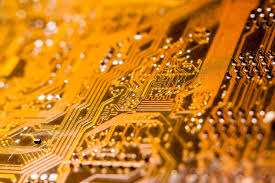
Assembly Techniques for PCB Manufacturers
Once the traces are deposited, a stainless-steel stencil is placed over the PCB. This stencil has openings that match the location of each component on the finished board. The assembler will then use a metal squeegee to deposit solder paste on the stencil. The solder will fill in the gaps between components, forming robust connections that can withstand mechanical stress.
The next step in the traditional assembly process is reflow soldering. This occurs when the melted and solidified solder bonds the components to the traces. The board and its components are sent through an oven, which heats the liquified solder to ensure that all connections are formed properly. Then, the board is cooled to allow the solder to harden and cement the components in place.
In addition to the design and fabrication process, PCB manufacturers must also ensure the integrity and durability of the boards. For this, they use various testing methods such as electrical testing, visual inspection, and X-ray analysis to detect potential issues. This helps prevent failures in the field, especially for high-reliability applications like medical devices, aerospace, and automotive electronics, where a malfunction could have severe consequences. Manufacturers also focus on complying with industry standards and certifications, such as ISO 9001, to guarantee that their products meet stringent quality control measures.
For more efficient and precise assembly, some companies utilize selective soldering. This technology inserts component leads into pre-drilled holes on the PCB, but only in specific areas of the board to prevent heat damage to sensitive areas. This method is also suitable for mixed double-sided assemblies with both SMD and THT components. Lastly, all PCBs undergo testing to measure their performance, including voltage, current, and signal output. If these characteristics exhibit unacceptable fluctuations or peaks, the board is not ready for assembly. Depending on the results of this test, the assembler may decide to recycle or scrap the PCB. Alternatively, they may choose to reuse the PCB or rework it for further testing and assembly.